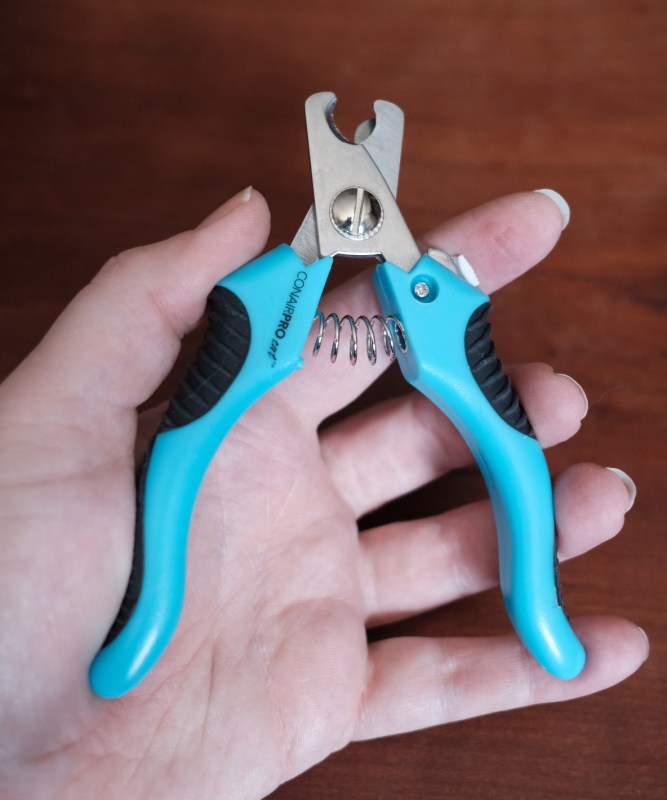
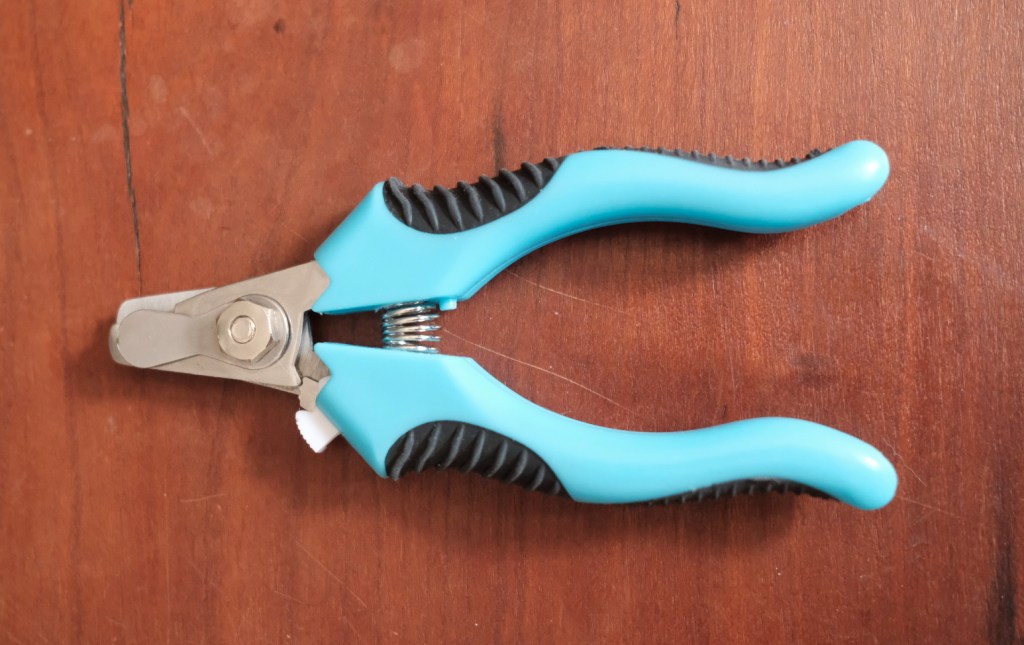
These are cat claw cutters used to trim cat nails. They have a non-slip silicone grip, hard plastic handles, a small spring in the center, stainless steel pieces on the head, and a small plastic and stainless lock on one side. The plastic handles were molded and attached to the milled stainless steel shafts.

I think David bought these, and I’m not exactly sure, but I think it was within the first year we had Jukie, so around 2019. I am not exactly sure where these were purchased. Either Walmart, PetValu, or Amazon. We are the first owners of these cutters. I used to have a pair that were smaller and harder to use because they didn’t have a spring that opened the cutters automatically. I haven’t had to perform any maintenance on them since we’ve had them. They are still very sharp.
ConAir designed and made these cutters. They are well known for home personal care items such as hair rollers, dryers, and styling tools. I suppose it was only time before they got into the pet grooming business too. I am not exactly sure where Conair manufactures grooming supplies, but their main office is in Stamford, CT. These cutters retail on Amazon for $16.99. For the amount of time I need to use this tool, I think the price is justified. If I were to trim both of my cat’s claws once a month for a year, that would be 24 sessions and 240 nails trimmed. That works out to be 1.40 per month and about $0.07 per claw trimmed. This tool has basically paid for itself already.
This article explains the history behind the nail clipper. It says the first patent was created in 1875. I found this video about why cats’ claws are so sharp when searching for “history of cutting cat claws.” I couldn’t find anything specifically about the direct history of trimming claes for domestic cats, but I learned that cats actually shed claws; they don’t sharpen them on furniture; they are just trying to release the keratin to promote shedding to reveal a sharper claw growing underneath. People cut their cat’s claws to reduce pain when handling their animals and to reduce the ruin of their furniture.

I like that there is a guard that stops the cutter from potentially sliding up too far on the cat’s claw. They look fairly approachable compared to other cutters on the market. I wish the cutters were designed to be more aesthetically pleasing. I imagine a set that you could leave out in your environment and would look like an art object rather than a cheap tool. Perhaps made of milled metal and coated in a matte black textured coating. I don’t love the plastic on the cutters. I don’t love the colour or the overall aesthetic. I often have to tighten the screw for the depth guard. These claw cutters remind me of a pair of gardening sheers. They have a crafty look to them, like something you’d buy at Michaels.
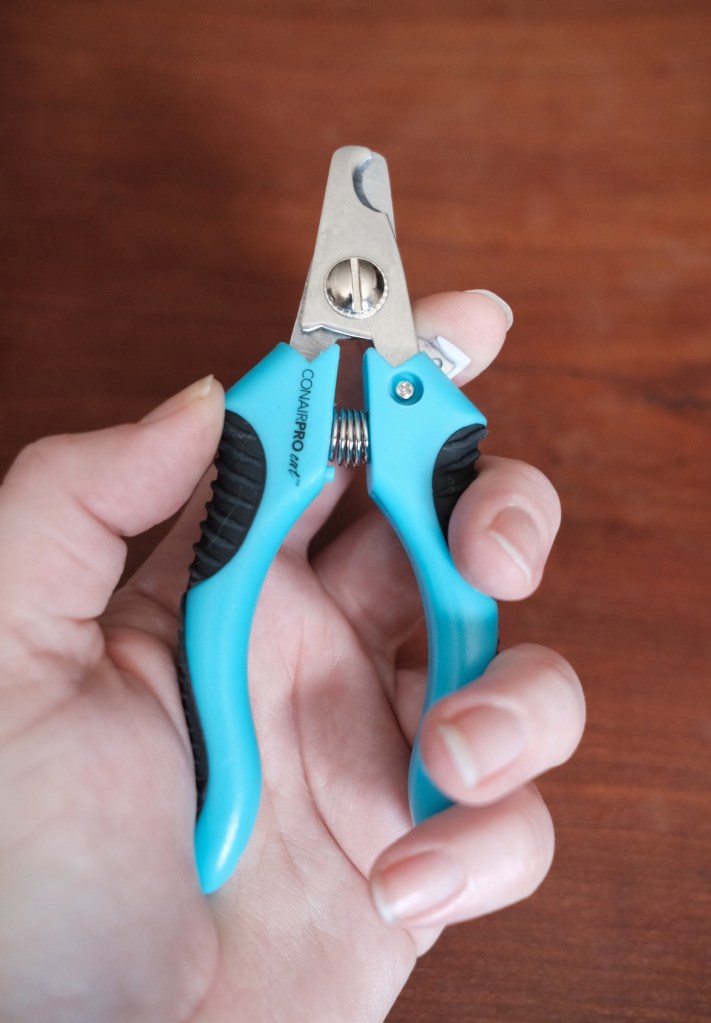
I also don’t always leave them in the same spot. The cutters typically live in my linen closet but can often be found on my stereo under the tv in a metal tray. Typically I’ll leave them out to remind myself to trim the cat’s claws. I often forget to put the cutters away. They often live all over the house because I can only get a few claws at a time and often need several cutting sessions over several days. We don’t typically get all of Jukis claws in one go, and he gets very stressed out, so we space it out.
I really hate cutting Jukies claws because he is like the Tasmanian devil when the cutters come out. He gets very upset and makes a very concerning meow to let us know he is VERY unhappy. The tool itself is easy enough to use. I wish it has a light on it because depending on how David is holding Juki’s claw, it is hard to see if you’re holding the tool in a good spot to make the cut.
I have had many cats in my life. Juki was the first cat I have had that was not declawed. Declawing is not acceptable anymore, and vets will not do it due to animal welfare. Juki used to be very okay with us trimming his claws, but over time has become very uncomfortable. I don’t know for sure, but I must have cut too low or something to make him not accept this grooming practice. Juki’s claws were so sharp, and when he was just trying to be close to us, he would cut us. It was very unpleasant for all of us. Millie, on the other hand, is very relaxed and will let me trim her claws without much fuss.

The cutters always remain in the fully open position, ready for a claw to be inserted. You hold the tool in one hand and the cat’s paw in the other while sliding the nail into the opening. You stop pushing the nail through before the cutting point reaches the interior quick. You squeeze the tool just how you would a pair of scissors. You want to squeeze it quickly and confidently to avoid cracking the cat’s claw. You can lock the cutter to prevent accidents but squeezing the handle and pushing the small plastic locking mechanism at the side towards the interior of the tool.
We typically trim the cat’s nails on the weekend during the day. I try to get them trimmed when the cats are napping, but Juki is too familiar with the tool and immediately retracts his paw when he sees it. I like the convenience of being able to control how sharp the cat’s claws are from the comfort of my home. It is a lot of effort and money to take the cats to the vet to have this service performed. Once I’m gone, I’d like this item to be donated to the SPCA if it is still in good condition.
 Material Appreciation